

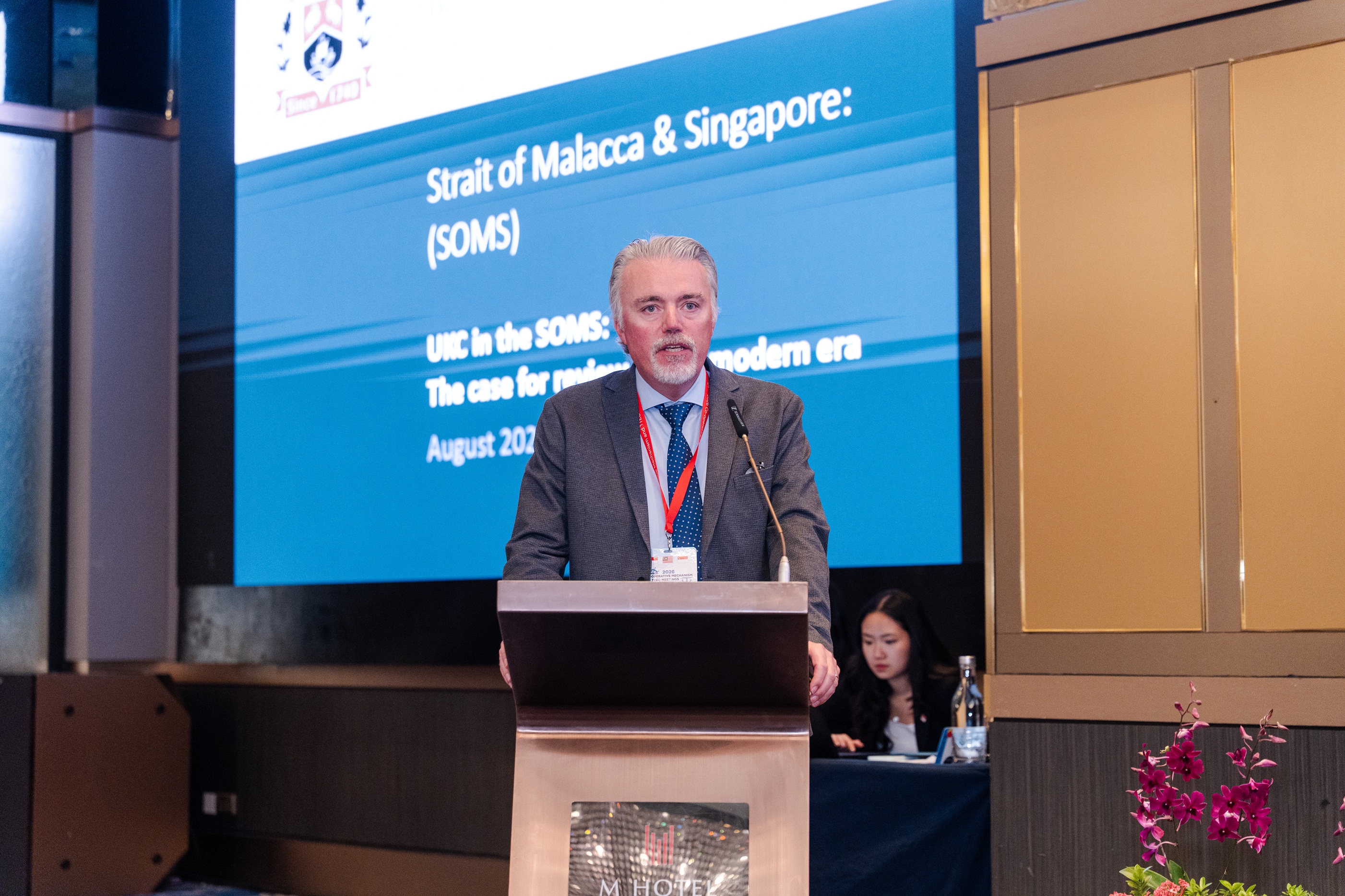
On Thu 27th August 2026 in Singapore at the 49th meeting of the Tripartite Technical Experts Group (TTEG) on The Safety of Navigation in the Straits of Malacca and Singapore (SOMS), the proposals made by Witherbys and The Nautical Institute during the 17th session of the Co-Operative Forum to review the Under Keel Clearance value in the SOMS were considered.
The 17th Co-Operative Forum held across 25-26 August had a record turnout, with the official MPA release confirming more than 300 delegates from over 125 countries and organisations in attendance for this two day Forum.
During the Forum, Singapore agreed that it is timely to review the UKC values in the SOMS, which were originally established in the 1970s. Singapore proposed a Straits Project together with Witherbys and The Nautical Institute.
The existing 3.5 metre minimum Under Keel Clearance (UKC) requirement in the SOMS was developed 50 years ago, based on the hydrographic information, vessel characteristics and navigational technology available at that time. Since then, significant advances have been made in hydrographic surveying, vessel design, understanding of squat and dynamic draught, electronic navigation and the availability of real-time environmental data, while traffic through the Straits has increased exponentially.
The present UKC requirement remains a fixed, static value, whereas modern UKC management can take account of vessel-specific and environmental factors including tide, swell, speed, squat, trim and water depth. Importantly, a review is not a proposal simply to reduce the existing safety margin: it is an opportunity to determine, using today's data and technology, whether the present framework remains the safest and most effective. This is particularly relevant because accident analysis in high density areas of the SOMS indicates that collision risk considerably outweighs grounding risk, while the existing UKC requirement bunches deep-draught vessels into concentrated tidal windows. A structured, evidence based review could therefore examine whether a more dynamic, risk based approach could maintain protection against grounding while reducing traffic concentration and improving the overall safety and efficiency of navigation through one of the world's most important waterways.
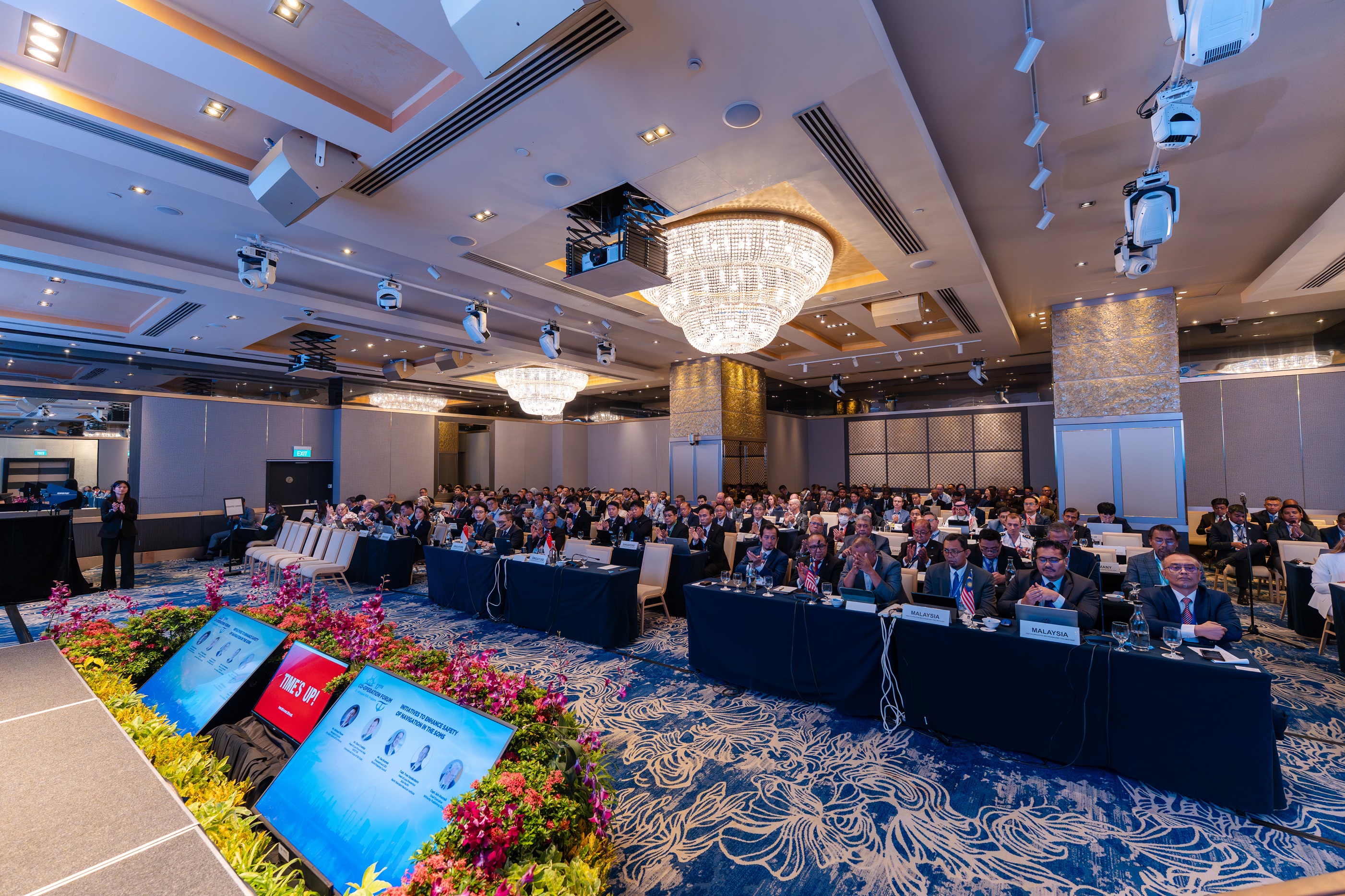
Malaysia highlighted that navigation and hydrographic requirements should be taken into account and that the project should take account of the forthcoming IHO S-100 standard (that will replace the existing S-57 standard) that should enable the integration of real-time digital marine data into ECDIS.
Malaysia further highlighted specifically that The IHO S-129 standard for Under Keel Clearance Management (UKCM), which is designed to deliver real-time and predicted water depth safety margins within ECDIS, aligns with such UKC Requirements.
Indonesia highlighted matters such as sandwave movement, particularly in 3 key areas, should be taken into account and that a Joint Survey Research Programme is also explored.
It was agreed and approved that the project for the ‘Review of UKC in the SOMS’ is led by Singapore, supported by Witherbys and The Nautical Institute and was allocated as TTEG Straits Project 16.
As project lead, Singapore requested input from Indonesia and Malaysia to allow the development the Terms of Reference for this project.
Capt. Iain Macneil MNM, CEO of Witherbys commented after the meeting that:
“This is not just a once in a generation review, but a once in a lifetime review and we look forward to working with Singapore and The Nautical Institute on this Straits Project to review UKC in the SOMS”.
Witherbys are assisting Japan’s Ministry of Land, Infrastructure, Transport and Tourism (MLIT), particularly its maritime administration, who have issued a series of questions seeking the views and experience of mariners in the SOMS.
This questionnaire focuses specifically on navigation practices and the use, effectiveness and reliability of Aids to Navigation (AtoN) throughout the SOMS.
Please take a few minutes to complete the questionnaire below and contribute to this once in a lifetime opportunity to reduce traffic concentration and improve the overall safety and efficiency of navigation through one of the world's most important waterways.